Emergency Services
Call 911 in the event of an emergency
Community Hospital’s Emergency Room is available 24 hours a day, 365 days a year. The Emergency room is staffed by RN’s, as well as Advanced Practice Registered Nurse, and Medical Doctors who are available or on call. Diagnostic services such as lab and X-Ray are available.
The main ER entrance is located on the south side of the hospital which can be accessed from Highway 59. Emergency Room signage will confirm you are headed in the right direction.
Emergency Transfer Services are provided by Ambulance Services or Lifenet Helicopter as requested by healthcare provider.

We are Ready to Serve you Whenever you Need Us
When you are faced with an unexpected illness or injury, Community Hospital’s emergency department stands ready to help. An emergency room physician, or nurse practitioner is available around the clock, everyday of the year. If you need emergency care, rest assured our team in the emergency department is always there to provide excellent patient care.
TeleStroke Program
Community Hospital–Fairfax (CH‑F) uses a state‑of‑the‑art TeleStroke program, made possible through a collaboration with Nebraska Medicine TeleStroke Neurology Services.
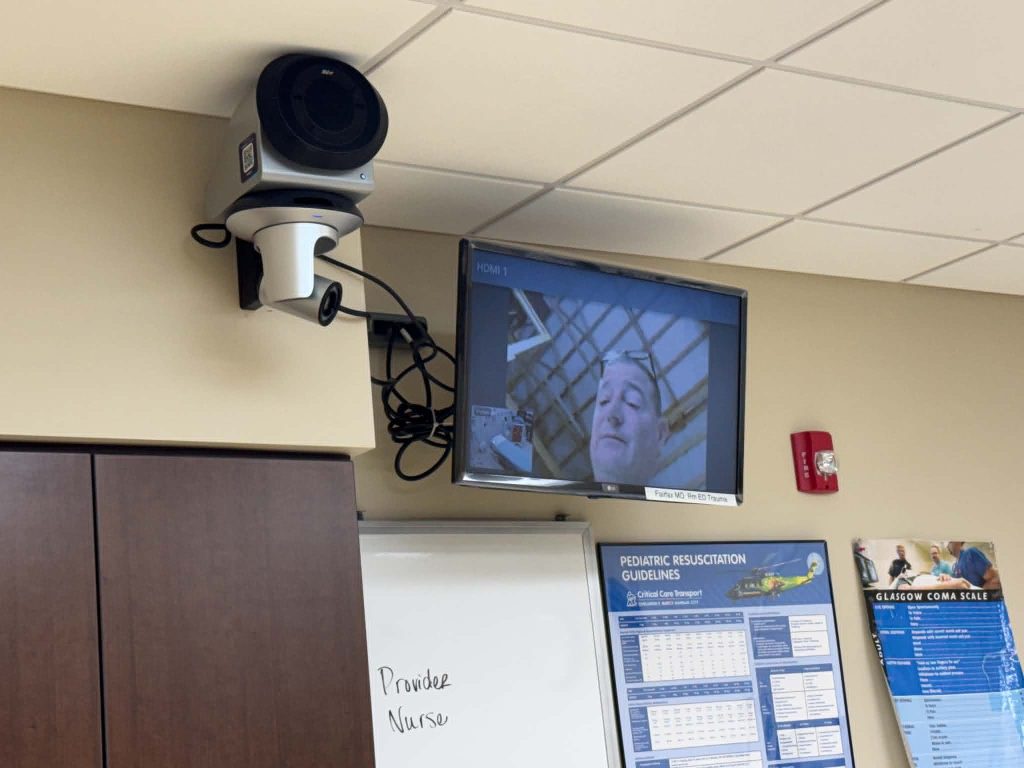
When a patient arrives with possible stroke symptoms, time is everything. The Emergency Department team immediately begins assessment and imaging, including a CT scan. Simultaneously, nursing staff enter critical patient information into the TeleDoc system. Once submitted, the team contacts the TeleStroke center at Nebraska Medicine to provide an initial report. Within moments, a stroke neurologist joins the patient’s room remotely through the Teledigm camera system.
The system is designed for seamless use. Staff do not need to operate or activate the camera. The neurologist can control the equipment remotely, allowing them to conduct a real‑time neurological exam from miles away. Using high‑resolution camera technology, the neurologist evaluates the patient’s speech, movement, responses, and pupils, while also reviewing bedside monitors and communicating directly with the care team. Each room is equipped with a digital stethoscope, enabling the neurologist to listen to heart and lung sounds in real time.
One of the most significant advantages of the TeleStroke program is the neurologist’s immediate access to CT imaging. Nebraska Medicine specialists can review radiology images instantly, allowing for rapid interpretation and timely treatment recommendations during these critical moments.
Following the assessment, the neurologist collaborates with the Emergency Department provider to determine the best course of action. This may include administering TNKase, a clot‑busting medication used to treat ischemic strokes. If a hemorrhagic stroke is identified, the neurologist provides immediate guidance for stabilization and next steps. When a higher level of care is required, the neurologist assists with coordinating transfer to Nebraska Medicine or another appropriate facility. In many cases, the same neurologist who evaluates the patient via camera at CH-F will continue caring for them after transfer, providing valuable continuity for patients and families.
To support consistent, evidence‑based care, the TeleStroke team has developed a standardized stroke algorithm in partnership with Nebraska Medicine. CH‑F will closely monitor “Door In, Door Out” times, aiming for transfers within 90 minutes when advanced stroke care is needed. The hospital is also working closely with Atchison Holt Ambulance District to ensure efficient patient transfers.